RISC-V Chip Adoption Driven by a Strategic Policy Set to Launch by China’s 2025

In a landmark move poised to reshape its technological landscape, China is gearing up to launch its inaugural national policy championing the adoption of RISC-V chips. This strategic initiative, slated for release as early as March 2025, marks a significant step in the country’s quest to pivot away from Western-dominated semiconductor technologies and bolster its homegrown innovation amid escalating global tensions.

Insiders familiar with the development reveal that the policy has been meticulously crafted through a collaborative effort involving eight key government entities. Among them are heavyweights like the Cyberspace Administration of China, the Ministry of Industry and Information Technology, the Ministry of Science and Technology, and the China National Intellectual Property Administration. Together, these bodies aim to cement RISC-V’s role as a cornerstone of China’s burgeoning tech ecosystem, fostering an environment ripe for domestic chip development and deployment.

The mere whisper of this policy has already sent ripples through the financial markets, igniting a wave of optimism among investors. On the day of the leak, Chinese semiconductor stocks staged an impressive rally. The CSI All-Share Semiconductor Products and Equipment Index, which had been languishing earlier, reversed course to surge by as much as 2.5%. Standout performers included VeriSilicon, which hit its daily trading cap with a 10% spike, alongside ASR Microelectronics, Shanghai Anlogic Infotech, and 3Peak, whose shares soared between 8.6% and an eye-catching 15.4% in afternoon trading.

At the heart of this policy push lies RISC-V, an open-source chip architecture that’s steadily carving out a global niche as a versatile, cost-effective rival to proprietary giants like Intel’s x86 and Arm Holdings’ microprocessor designs. Unlike its high-powered counterparts, RISC-V is often deployed in less demanding applications—think smartphones, IoT devices, and even AI servers—making it a pragmatic choice for a wide swath of industries. In China, its allure is twofold: slashed development costs and, critically, its freedom from reliance on U.S.-based firms, a factor that’s taken on heightened urgency amid trade restrictions and geopolitical friction.

Until now, RISC-V’s rise in China has been organic, driven by market forces rather than official mandates. This forthcoming policy changes the game, thrusting the architecture into the spotlight as a linchpin of Beijing’s broader campaign to achieve technological self-sufficiency. The timing is no coincidence—U.S.-China relations remain strained, with American policymakers sounding alarms over China’s growing leverage in the RISC-V space. Some U.S. lawmakers have even pushed to curb American companies’ contributions to the open-source platform, fearing it could turbocharge China’s semiconductor ambitions.

China’s RISC-V ecosystem is already buzzing with activity, spearheaded by homegrown innovators like Alibaba’s XuanTie division and rising star Nuclei System Technology, both of which have rolled out commercially viable RISC-V processors. The architecture’s flexibility is proving especially attractive in the AI sector, where models like DeepSeek thrive on efficient, lower-end chips. For smaller firms chasing affordable AI solutions, RISC-V offers a tantalizing blend of performance and price—a trend that could gain serious momentum under the new policy.

Sun Haitao, a manager at China Mobile System Integration, underscored the pragmatic appeal of RISC-V in a recent statement. “Even if these chips deliver just 30% of the performance of top-tier processors from NVIDIA or Huawei,” he noted, “their cost-effectiveness becomes undeniable when you scale them across multiple units.” This scalability could prove transformative for industries looking to maximize output without breaking the bank.

As China prepares to roll out this groundbreaking policy, the global tech community is watching closely. For Beijing, it’s a calculated gambit to secure its place at the forefront of the semiconductor race—one that could redefine the balance of power in a world increasingly divided by technology.
Opinion: AI Will Never Gain Consciousness

Artificial intelligence will never become a conscious being due to the lack of aspirations that are inherent in humans and other biological species. This statement was made by Sandeep Naiwal, co-founder of Polygon and the AI ​​company Sentient, in a conversation with Сointelegraph.

The expert does not believe that the end of the world is possible due to artificial intelligence gaining consciousness and seizing power over humanity.

Nailwal was critical of the theory according to which intelligence arises accidentally as a result of complex chemical interactions or processes. Although they can lead to the emergence of complex cells, there is no talk of the emergence of consciousness, the entrepreneur noted.

The co-founder of Polygon also expressed concerns about the risks of surveillance of people and the restriction of freedoms by centralized institutions with the help of artificial intelligence. Therefore, AI should be transparent and democratic, he believes.

[…] Ultimately, global AI, which can create a world without borders, must be controlled by every person,” Nailwal emphasized.

He added that everyone should have a personal artificial intelligence that is loyal and protects against the neural networks of influential corporations.

Recall that in January, Simon Kim, CEO of the crypto venture fund Hashed, expressed confidence that the future of artificial intelligence depends on a radical shift: opening the “black box” of centralized models and creating a decentralized, transparent ecosystem on the blockchain.

Agentic AI: Pioneering Autonomy and Transforming Business Landscapes

(um) let’s make tech work for us

The new autonomous systems labelled AI agents represent the latest evolution of AI technology and mark a new era in business. AI agents, in contrast to traditional models of AI that simply follow commands given to them and emit outputs in a specific format, work with a certain level of freedom. According to Google, these agents are capable of functioning on their own, without needing supervision from a human all of the time. The World Economic Forum describes them as systems that have sensors to see and effectors to interact with the environment. AI agents are expected to transform industries as they evolve from rigid, rule-based frameworks to sophisticated models adept at intricate decision-making . With unprecedented autonomy comes equally unprecedented responsibility. The additional benefits agentic AI technology brings is accompanied by unique challenges that invite careful consideration, planning, governance, and foresight.

The Mechanics of AI Agents: A Deeper Dive

Traditional AI tools, such as Generative AI (GenAI) or predictive analytics platforms, rely on predefined instructions or prompts to deliver results. In contrast, AI agents exhibit dynamic adaptability, responding to real-time data and executing multifaceted tasks with minimal oversight. Their functionality hinges on a trio of essential components:

  • Foundational AI Model: At the heart of an AI agent lies a powerful large language model (LLM), such as GPT-4, LLama, or Gemini, which provides the computational intelligence needed for understanding and generating responses.
  • Orchestration Layer: This layer serves as the agent’s “brain,” managing reasoning, planning, and task execution. It employs advanced frameworks like ReAct (Reasoning and Acting) or Chain-of-Thought prompting, enabling the agent to decompose complex problems into logical steps, evaluate outcomes, and adjust strategies dynamically—mimicking human problem-solving processes.
  • External Interaction Tools: These tools empower agents to engage with the outside world, bridging the gap between digital intelligence and practical application. They include:
    • Extensions: Enable direct interaction with APIs and services, allowing agents to retrieve live data (e.g., weather updates or stock prices) or perform actions like sending emails.
    • Functions: Offer a structured mechanism for agents to propose actions executed on the client side, giving developers fine-tuned control over outputs.
    • Data Stores: Provide access to current, external information beyond the agent’s initial training dataset, enhancing decision-making accuracy.

This architecture transforms AI agents into versatile systems capable of navigating real-world complexities with remarkable autonomy.

Multi-Agent Systems: The Newest Frontier

The Multi-Agent System (MAS) market is in for tremendous growth – Mckinsey gold, with a staggering predicted growth rate of nearly 28% by 2030. Recently Bloomberg predicted AI breakthroughs will soon give rise to multi-agent systems, collaborative networks of AI agents working collaboratively towards ambitious objectives. These systems promise scalability, surpassing the benefits of single operating agents.

Artificial imagination translates to a smart city. Imagine multiple AI agents working alongside each other. One controlling the signals, another managing traffic directing units, and an extra aiding with alert responder rerouting. And all of this is happening in real time!

Governance is key here to prevent a systemic failure, restricting conflicting commands that can stipulate paralysis or possibly force dysfunctions.Guaranteeing multi-agent systems possibility should be able to provide semi-standardized freedom, however, the benefits are the only ensured protocols alongside need need to be prescribed to.

Opportunities and Challenges

The potential of AI agents is game changing, but their independence creates grave concerns. The World Economic Forum highlights some challenges that companies must deal with: 

  •  Risks Associated with Autonomy: Ensuring safety and reliability becomes all the more difficult as agents become more independent. For example, an unmonitored agent could execute resource allocation that would trigger operational failures with cascading effects. 
  • Lack of Accountability: As trust is already fragile due to the opaque reasoning of ‘black box’ behavior, it becomes even more crucial within high risk healthcare or finance situations. Ensuring transparency and accountability becomes non negotiable.
  • Risks Surrounding Privacy and Security: A lot of sensitive information puts trust in jeopardy. An agent functioning effectively only having access to a multitude of sensitive systems and datasets makes one pose the question ‘How do we grant sufficient permissions without compromising security?’ Strong policies are needed to enforce standards to protect sensitivity and privacy while preventing breaches.

Some of these risks require guarding by taking proactive measures like consistent monitoring, adhering to ethical AI principles, human-in-the-loop oversight for garnering vital AI decision-making frameworks to retain control. Organizations need to deploy auditing tools that monitor and alter agent paths during deviations to regain control and maintain organizational goals.

The Human-AI Partnership

Even though AI agents have an independent function, their purpose is not to replace human reasoning but rather to augment it. How the EU AI Act works reminds us of the necessity of human intervention in processes like security or legal compliance which are sensitive. The best situation is one where both humans and machines work together: agents perform the monotonous and repetitive work that requires processing large amounts of data—this enables humans to be more strategic, creative, and ethical.

In a logistics company, for instance, an AI agent may be able to optimize the delivery routes using traffic information autonomously, and a manager can use their judgment and approve the AI’s plan using customer preferences or other unforeseen factors. This enables human control and supervision to be maintained while efficiency is also enhanced.

Guidelines for Implementing Agentic AI Strategically

Both Google Analytics and the World Economic Forum are integrated around a central idea. The responsible use of AI agents can result in outstanding value creation and unparalleled innovation. To reap value with manageable risks, businesses need to employ the following practices:  

  • Develop Skills: Prepare workforce on the building, implementation, and administration of AI agents to ensure the effective application of AI technology.  
  • AI Ethics: Develop appropriate business governance frameworks that adhere to the international benchmarks, the EU AI Act for instance, requiring fair and accountable operations of the agents.  
  • Ethics Boundaries: Delegated agent discretion must come with boundary safeguards to eliminate boundary overreach or lateral decision making through establishing unique controls.  
  • Validation Check: Enable behavioral modification to organizational needs through active auditing of the agent, stress testing em, and refining organizational value objectives.


Final thoughts

The integration of reasoning and planning gives Agent AI the ability to act on its own, AI agents mark a pivotal leap in the evolution of artificial intelligence. Their potential to change industries like personalized healthcare or smart cities is phenomenal but using AI carelessly is a grave mistake. For AI programs to be dependable companions, trust and security must anchor their development.

Organizations that find the right balance to enable agents to innovate while maintaining human supervision would be the ones leading the charge in this technological revolution. Agentic AI transforms it from an ordinary business tool to a paradigm shift re-imagining autonomy. Such a future is bound to belong to those who embrace its potential with clarity and caution.

Grok Names Elon Musk as the Main Disinformer

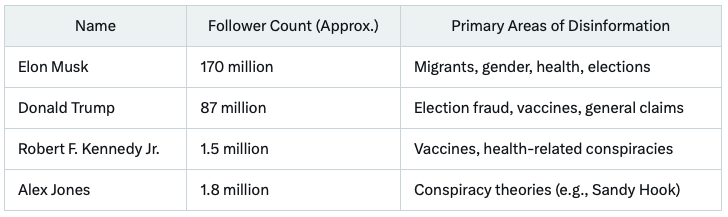
Elon Musk is the main disseminator of disinformation in X, according to the AI ​​assistant Grok from the entrepreneur’s startup xAI, integrated into his social network.

The billionaire has a huge audience and often spreads false information on various topics, the chatbot claims. Among other disinformers, according to the neural network: Donald Trump, Robert F. Kennedy Jr., Alex Jones and RT (Russian television).

Trump shares false claims about the election, Kennedy Jr. – about vaccines, and Alex Jones is known for spreading conspiracy theories. Russian television lies about political issues, Grok added.

Grok’s Top Disseminators of Disinformation. Data: X.

The chatbot cited Rolling Stone, The Guardian, NPR, and NewsGuard as sources of information.

The selection process involved analyzing multiple sources, including academic research, fact-checking organizations, and media reports, to identify those with significant influence and a history of spreading false or misleading information,” the AI ​​noted.

The criteria for compiling the rankings included the volume of false information spread, the number of followers, and mentions in credible reports.

When asked for clarification, Grok noted that the findings may be biased because the sources provided are mostly related to the funding or opinions of Democrats and liberals.

Recall that in January, artificial intelligence was used to spread fake news about the fires in Southern California.

A similar situation arose after Hurricane Helene.

Google Unveils Memory Feature for Gemini AI Chatbot

Google has launched a notable update to its Gemini AI chatbot, equipping it with the ability to remember details from previous conversations, a development experts are calling a major advancement.

In a blog post released on Thursday, Google detailed how this new capability allows Gemini to store information from earlier chats, provide summaries of past discussions, and craft responses tailored to what it has learned over time.

This upgrade eliminates the need for users to restate information they’ve already provided or sift through old messages to retrieve details. By drawing on prior interactions, Gemini can now deliver answers that are more relevant, cohesive, and enriched with additional context pulled from its memory. This results in smoother, more personalized exchanges that feel less fragmented and more like a continuous dialogue.

Rollout Plans and Broader Access
The memory feature is first being introduced to English-speaking users subscribed to Google One AI Premium, a $20 monthly plan offering enhanced AI tools. Google plans to extend this functionality to more languages in the near future and will soon bring it to business users via Google Workspace Business and Enterprise plans.

Tackling Privacy and User Control
While the ability to recall conversations offers convenience, it may raise eyebrows among those concerned about data privacy. To address this, Google has built in several options for users to oversee their chat data. Through the “My Activity” section in Gemini, individuals can view their stored conversations, remove specific entries, or decide how long data is kept. For those who prefer not to use the feature at all, it can be fully turned off, giving users complete authority over what the AI retains.

Google has also made it clear that it won’t use these stored chats to refine its AI models, putting to rest worries about data being repurposed.

The Race to Enhance AI Memory

Google isn’t alone in its efforts to boost chatbot memory. OpenAI’s Sam Altman has highlighted that better recall is a top demand from ChatGPT users. Over the last year, both companies have rolled out features letting their AIs remember things like a user’s favorite travel options, food preferences, or even their preferred tone of address. Until now, though, these memory tools have been fairly limited and didn’t automatically preserve entire conversation histories.

Gemini’s new recall ability marks a leap toward more fluid and insightful AI exchanges. By keeping track of past talks, it lets users pick up where they left off without losing the thread, proving especially handy for long-term tasks or recurring questions.

As this feature spreads to more users, Google underscores its commitment to transparency and control, ensuring people can easily manage, erase, or opt out of data retention altogether.

Sam Altman talks about the features of GPT-4.5 and GPT-5

OpenAI CEO Sam Altman shared the startup’s plans to release GPT-4.5 and GPT-5 models. The company aims to simplify its product offerings by making them more intuitive for users.

Altman acknowledged that the current product line has become too complex, and OpenAI is looking to change that.

We hate model selection as much as you do and want to get back to magical unified intelligence,” he wrote.

GPT-4.5, codenamed Orion, will be the startup’s last AI model without a “chain of reasoning” mechanism. The next step is to move toward more integrated solutions.

The company plans to combine the o and GPT series models, creating systems capable of:

  • using all available tools;
  • independently determining when deep thinking is needed and when an instant solution is enough;
  • adapting to a wide range of tasks.

GPT-5 integrates various technologies, including o3. Other innovations will include canvas capabilities (Canvas-mode), search, deep research (Deep Research) and much more.

Free GPT-5 subscribers will get unlimited access to the model’s tools on standard settings. Plus and Pro account holders will be able to use advanced features with a higher level of intelligence.

Regarding the release dates of GPT-4.5 and GPT-5, Altman wrote in the comments to the tweet about “weeks” and “months“, respectively.

According to Elon Musk, ChatGPT’s competitor, the Grok 3 chatbot, is in the final stages of development and will be released in one to two weeks. Reuters writes about this.

Grok 3 has very powerful reasoning capabilities, so in the tests we’ve done so far, Grok 3 outperforms all the models that we know of, so that’s a good sign,” the entrepreneur said during a speech at the World Summit of Governments in Dubai.

Recall that Altman turned down Musk and a group of investors’ bid to buy the non-profit that controls OpenAI for $97.4 billion. The startup’s CEO admitted that this was an attempt to “slow down” the competing project.

Managing Large-Scale AI Systems: Data Pipelines and API Security

Artificial Intelligence is revolutionizing many sectors across the globe, and with this, as an organization scales its AI work, it is important that the infrastructure that will anchor these systems also evolves simultaneously. Lying at the heart of this infrastructure are data pipelines and APIs, crucial in the efficient functionality and performance of AI systems.

However, as companies start to use AI across their operations, the data pipes and API security present the big challenge. Weak management of this component might lead to data leakage, operational inefficiency, or catastrophic failure.

In this article, we’ll explore the key considerations and strategies for managing data pipelines and API security, focusing on real-world challenges faced by organizations deploying large-scale AI systems.

Data Pipelines: Intrinsic Building Block of AI Systems

Fundamentally, a data pipeline defines the flow of information that comes from various sources through a series of steps, eventually feeding AI models, which rely on this input for the purposes of training and making inferences. Large AI systems, specifically those designed to solve complex problems related to natural language processing or real-time recommendation engines, rely heavily on good-quality and timely data. Due to this fact, efficient management of data pipelines is crucial to ensure the efficacy and accuracy of AI models.

Scalability and Performance Optimization: One of the major problems related to data pipelines is scalability. In a small-scale implementation of AI, a simple data ingestion process might work. However, when the system grows and more data sources are added, performance bottlenecks can crop up. Large-scale AI applications often require processing large amounts of data in real-time or near real-time.

Achieving this goal requires an infrastructure that would be able to accommodate such increasing demand without losing the efficiency of vital operations. Distributed systems like Apache Kafka, combined with cloud-based services such as Amazon S3, provide scalable solutions that can efficiently deal with data transmission.

Data Quality and Validation: Regardless of the design excellence of the artificial intelligence model, subpar data quality will result in erroneous predictions. Consequently, the management of data quality is an indispensable component of data pipeline administration. This process encompasses the elimination of duplicates, addressing absent values, and standardizing datasets to maintain consistency across various sources.

With tools such as Apache Beam and AWS Glue, one gets a platform for real-time data cleansing and transformation, which ensures that only the most accurate and relevant data flows to the AI model.

Automation, Surveillance, and Fault Management: Automation becomes a key requirement for extended AI environments where data continuously flows in from various sources. The establishment of automated data pipelines means less intervention from human personnel to manage the data; on the other hand, real-time monitoring allows an organization to catch errors before they can affect business operations. On this line, Datadog and Grafana-like platforms create real-time views around the status of data pipelines-when latency or data corruption occurs-and the necessary automation of error-handling processes.

API Security: Gateway to Artificial Intelligence Systems

Basically, APIs are bridges that connect various applications, services, and systems with an AI model. As such, they become part and parcel of the core of modern AI systems. Equally, APIs are among the greatest weaknesses in the chain of large-scale systems. The rise in AI has meant increased API endpoints being created, and each endpoint is a root for another breach, maybe even more serious, if not well guarded.

Authentication and Authorization: Basic but very crucial security measures for APIs include efficient authentication and authorization. Without proper authentication, APIs can become a gateway to ciphered information and functions hidden inside the AI system. OAuth 2.0 and API keys are just some of the strategies that offer flexible methods of securely accessing APIs. However, it is not enough to just apply these techniques; regular audits regarding API access logs need to be performed to ensure that the right users have the proper access level.

Rate Limiting and Throttling: Large-scale AI systems are very vulnerable to malicious actors attempting Distributed Denial-of-Service attacks. In such an attack, the API endpoints are overloaded with requests by the attackers until the system becomes crashed. Rate limiting and throttling mechanisms could prevent this by allowing only a limited number of requests from a user within a certain period of time.

This ensures that no single user or collective group of users can overwhelm the system, and hence keeps the system intact and available.

Encryption and Data Protection: The protection of data involves more than just the security of the AI models and databases but also the data when it flows through the system via APIs. Encrypting data at rest and in transit using SSL/TLS protocols, for example, ensures that even if an attacker manages to intercept the data, it will still be unreadable. Moreover, encryption, together with other data protection approaches, protects sensitive information from unauthorized access, such as personal data and financial records.

Anomaly Detection and Monitoring: In large AI ecosystems, it is impossible to manually monitor each and every API interaction for potential security breaches. It is here that AI can be a strong ally. State-of-the-art security solutions, such as Google’s Cloud Armor or machine-learning-powered anomaly detection algorithms, can monitor API traffic in real time to spot unusual activities or behavior that may indicate an attack.

This is done by leveraging AI in securing the API infrastructure to better defend the system against emerging threats.

Balancing Security and Performance

One of the biggest challenges that organizations face with the management of data pipelines and API security is having to balance these issues against considerations around performance. For instance, encrypting all data moving across a pipeline can dramatically increase security; in turn, this can degrade performance due to increased latency, which then diminishes the overall effectiveness of the system. Similarly, very stringent rate limiting can help protect the system from DDoS attacks but at the same time can prevent legitimate users from accessing it during high demand periods.

In a word, the key to it all is finding a balance that works for both security and performance. This requires tight collaboration between security experts, data engineers, and developers. A DevSecOps methodology would ensure that security is indeed woven into the fabric of every stage of the development and deployment lifecycle without sacrificing performance. And, further testing and incremental improvements are much essential for the perfect tuning of security versus scalability.

Conclusion

Accordingly, with the increasing scale and complexity of AI systems, managing data pipelines and securing APIs become fundamentally critical aspects. Any failure to address these aspects on the part of any organization may lead to data breach, overall system inefficiencies, and loss of reputation.

However, the usage of scalable data pipeline frameworks, API protection using high-level authentication, encryption, and monitoring, and maintaining a proper balance between security and performance, allows an organization to use the full potential of artificial intelligence by minimizing the probable risks to its systems. Building on appropriate strategies and using efficient tools can provide a seamless integration of data pipelines and API security oversight into an organization’s AI infrastructure, so reliability, efficiency, and security are ensured as systems scale.

Authored by Heng Chi, Software Engineer

CIA and MI6 chiefs reveal the role of AI in intelligence work

The heads of the CIA and MI6 revealed how artificial intelligence is changing the work of intelligence agencies, helping to combat disinformation and analyze data. AI technologies are playing a major role in modern conflicts and helping intelligence agencies adapt to new challenges.

The heads of the CIA Bill Burns and MI6 Richard Moore, during a recent joint appearance, described how artificial intelligence is transforming the work of their intelligence agencies.

According to them, the main task of the agencies today is “adapting to modern challenges”. And it is AI that is central to this adaptation.

New challenges in modern conflicts

The heads of intelligence noted the key role of technology in the conflict in Ukraine.

For the first time, combat operations combined modern advances in AI, open data, drones and satellite reconnaissance with classical methods of warfare.

This experience confirmed the need not only to adapt to new conditions, but also to experiment with technology.

Combating disinformation and global challenges

Both intelligence agencies actively use AI to “analyze data, identify key information, and combat disinformation.”

Experts named China as one of the notable threats. In this regard, the CIA and MI6 have reorganized their services to work more effectively in this area.

AI — a tool for defense and attack

Artificial intelligence helps intelligence agencies not only analyze data, but also protect their operations by creating “red teams” to check for vulnerabilities.

The use of cloud technologies and partnerships with the private sector make it possible to unleash the full potential of AI.

The Application of AI towards Real Time Fraud Detection on Digital Payments

The growth and development of the internet coupled with advanced digital communication systems has greatly transformed the global economy, especially in the area of commerce. Fraud attempts, on the other hand, have become more diverse and sophisticated over time, costing businesses and financial institutions millions of dollars each year. Fraudster activities and techniques have evolved from unsophisticated detection processes to contemporary automated methods based on rules through intelligent systems. Currently, artificial intelligence (AI) assists in both controlling and combating fraud, offering help to advance the sector of finance technology (fintech). In this article, we will explain the mechanics of AI in digital payments fraud detection focusing on the technical aspects, a real case, and relevant comments for mid-level AI engineers, product managers, and other professionals in fintech.

The Increased Importance of Identifying Fraud In Real-Time

The volume and complexity of digital payments, which include credit card transactions, P2P app payments, A2A payments, and others, continue to rise. Between 2023 and 2028, Juniper Research estimates that the cost of online payment fraud will climb beyond $362 billion globally. Automated and social engineering attacks exploit weaknesses such as stolen credentials and synthetic identities, often attacking within moments. Outdated methods of fraud detection that depend upon static rules (‘flag transactions over $10,000’) are ineffective against these fast paced threats. Systems are overloaded and angry customers worsen the problem, all the while undetected fraud continues to sail through.

Thanks to AI. Now, everything is seconds away, (we’ll repeat) all because of AI. With machine learning, deep learning and real-time data processing, AI can evaluate large amounts of data, recognize patterns, adapt to changes, and detect anomalies, all in a matter of milliseconds. For professionals in fintech, this movement is both a chance and a challenge: build systems that are accurate, fast, and scalable all while reducing customer friction.

How AI-Fueled Real-Time Fraud Detection Works

AI-enhanced fraud detection is supported by three tiers: data, algorithms, and real-time execution. Let’s simplify this concept for a mid-level AI engineering or product management team. 

The Underlying Information: For any front line fraud detection system, a payment transaction generated in real-time must be coupled with rich and high-quality data. This means diverse data, which includes transaction histories, user behavior profile data, device fingerprints, IP geolocation, and external sources such as chatter from the dark web. For instance, a transaction attempted from a new device located in a foreign country can be flagged as suspicious, when it is combined with a user’s base spending patterns. AI systems pull this data through streaming services such as Apache Kafka, or even cloud-native solutions like AWS Kinesis, which promises low latency. Data engineers must be willing to collect clean basic structured datasets, because the system performs poorly when the data given is of poor granularity. This is a proven lesson learned many times in the past twenty years for me.

Algorithms: The realm of AI has brought super advanced machine learning models into the world of detecting fraudulent activities, and these models are the backbone of AI fraud detection. Models with supervised learning capabilities work with labeled datasets (e.g. “fraud” vs. “legitimate”) and are proficient in recognizing established fraud patterns. Due to their accuracy and interpretability, Random Forests, and Gradient Boosting Machines (GBMs) are among the most popular models. Unfortunately, fraud is evolving much faster than data can be labeled and this is where unsupervised learning comes in. Clustering algorithms DBSCAN or autoencoders do not need previous examples and can pull unusual transactions for review. For example, even in the absence of historical fraud signatures, the sudden spike in small, rapid transfers can be flagged as it might indicate money laundering. Detection is further improved by deep learning models, such as recurrent neural networks (RNNs), that observe time series data (e.g. transaction timestamp) for hidden patterns and relationships.

Execution In Real-Time: Time is of the essence with digital payments. The payment systems must make a decision to approve, decline, or escalate a transaction in less than 100 milliseconds. This is only achievable by using distributed computing frameworks such as Apache Spark’s batch processing and Flink’s stream real-time analysis processing. Scaling inference is done using GPU-accelerated hardware, e.g., millions of transactions per second through NVIDIA CUDA, allowing for easy handling of over a thousand transactions every second. Product managers should remember that latency trade-offs can be detrimental when the complexity of the model increases; a simpler logistic regression may be suitable for low-risk scenarios, while high-precision cases require complex neural networks.

Real-World Case Study: PayPal’s AI-Driven Fraud Detection

To illustrate AI’s impact, consider PayPal, a fintech giant processing over 22 billion transactions annually. In the early 2010s, PayPal faced escalating payment fraud, including account takeovers and stolen card usage. Traditional rule-based systems flagged too many false positives, alienating users, while missing sophisticated attacks. By 2015, PayPal had fully embraced AI, integrating real-time ML models to combat fraud – a strategy we’ve seen replicated across the industry.

PayPal’s approach combines supervised and unsupervised learning. Supervised models analyze historical transaction data—device IDs, IP addresses, email patterns, and purchase amounts—to assign fraud probability scores. Unsupervised models detect anomalies, such as multiple login attempts from disparate locations or unusual order sizes (e.g., shipping dozens of items to one address with different cards). Real-time data feeds from user interactions and external sources (e.g., compromised credential lists) enhance these models’ accuracy.

Numbers: According to PayPal’s public reports and industry analyses, their AI system reduced fraud losses by 30% within two years of deployment, dropping fraud rates to below 0.32% of transaction volume—a benchmark in fintech. False positives fell by 25%, improving customer satisfaction, while chargeback rates declined by 15%. These gains stemmed from processing 80% of transactions in under 50 milliseconds, enabled by a hybrid cloud infrastructure and optimized ML pipelines. For AI engineers, PayPal’s use of ensemble models (combining decision trees and neural networks) offers a practical lesson in balancing precision and recall in high-stakes environments.

Technical Challenges and Solutions

Implementing AI for real-time fraud detection isn’t without hurdles. Here’s how to address them:

  • Data Privacy and Compliance: Regulations like GDPR and CCPA mandate strict data handling. Techniques like federated learning—training models locally on user devices – minimize exposure, while synthetic data generation (via GANs) augments training sets without compromising privacy.
  •  Model Drift: Fraud patterns shift, degrading model performance. Continuous retraining with online learning algorithms (e.g., stochastic gradient descent) keeps models current. Monitoring metrics like precision, recall, and F1-score ensures drift is caught early.
  •  Scalability: As transaction volumes grow, so must your system. Distributed architectures (e.g., Kubernetes clusters) and serverless computing (e.g., AWS Lambda) provide elastic scaling. Optimize inference with model pruning or quantization to reduce latency on commodity hardware.

The Future of AI in Fraud Detection

Whatever the future holds, it’s clear that AI’s role will only become more pronounced. For one, Generative AIs such as large language models (LLMs) could develop new methods of simulating fraud, while the involvement of blockchain technology could guarantee that the leger’s transaction records are safe from any possible modification. Identity verification through biometrics face detection and voice recognition will limit synthetic identity fraud.

As was noted previously, the speed, accuracy, and adaptability of AI in real-time fraud detection can enable users to effortlessly pinpoint and eliminate issues within digital payments that rule-based systems cannot alleviate. While PayPal’s success is evidence of this capability, the journey is not easy and requires fundamental discipline along with a well-planned approach. Now, for AI engineers, product managers, and fintech professionals, moving into this space is no longer purely a career change; it is an opportunity to build a safer financial system for all.